
2026-10-11 · Michael 'Mike' Thompson
Why Tree Branches Cause Partial Power Loss Near Stetson University
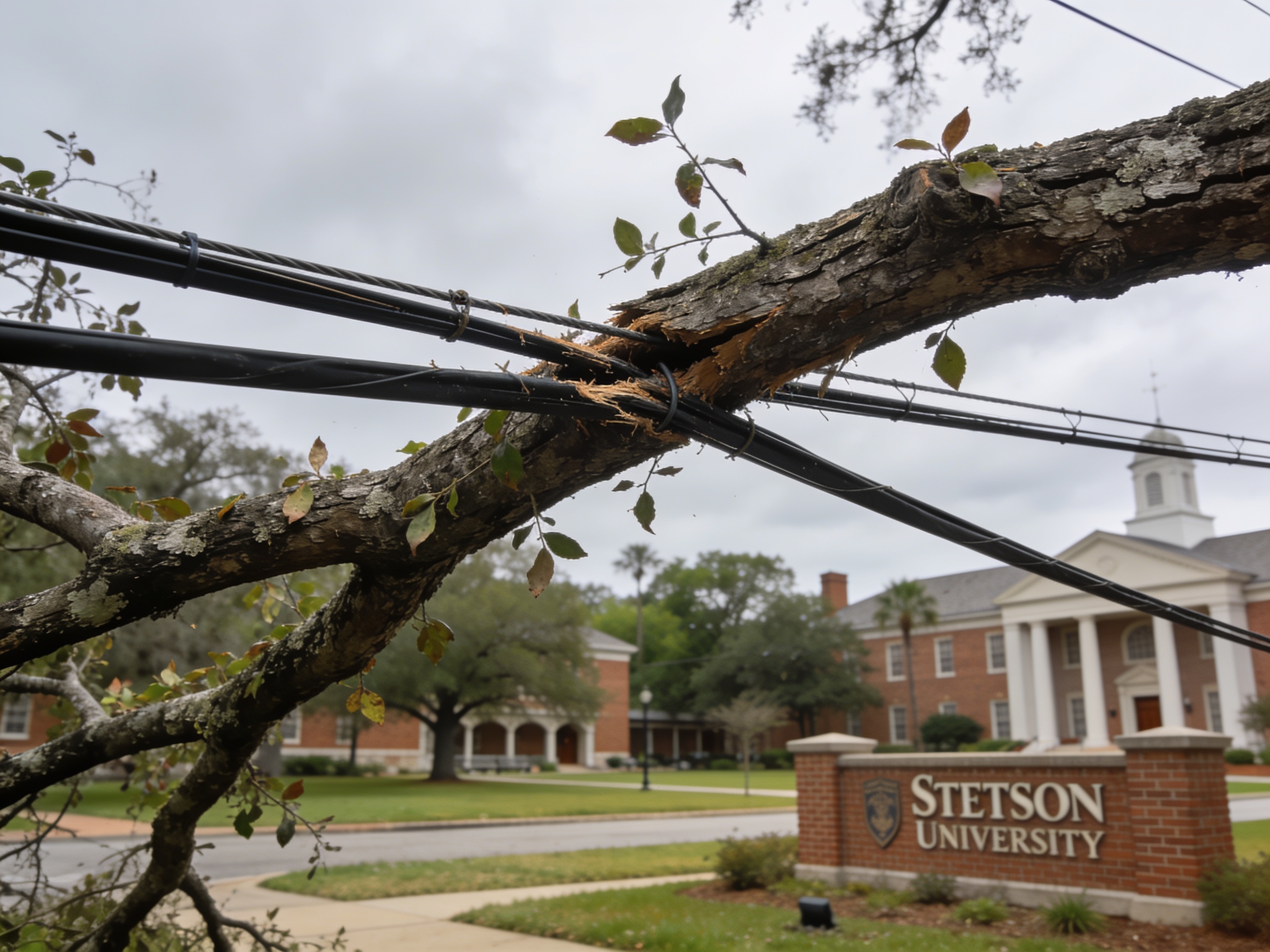
Tree branches are a primary culprit for partial power loss near Stetson University due to the dense canopy cover, the humid subtropical climate of Volusia County, and the age of some of the electrical lines serving the historic district. When the heavy rainfall common in our summers saturates tree limbs, or when strong winds associated with tropical systems sweep through, these branches can sag, break, and make contact with power lines. This contact often creates a fault that trips a localized circuit, leading to partial outages in specific sections of homes or blocks, rather than a complete blackout. It's a common issue we address for residents around Woodland Boulevard and extending into North DeLand.
The Impact of DeLand's Humid Subtropical Climate
DeLand's climate, characterized by hot, humid summers and mild winters, significantly contributes to the problem of tree-related power outages. The abundant moisture promotes vigorous tree growth, meaning branches quickly extend and thicken, increasing their potential to interfere with overhead power lines. During the summer months, the combination of high humidity and intense heat can also stress trees, making limbs more susceptible to breaking, especially older, weaker ones. When afternoon thunderstorms roll in, as they frequently do, the sudden downpours add considerable weight to leaves and branches, causing them to sag and potentially arc with electrical wires.
Furthermore, the consistent humidity can affect the integrity of tree wood over time, making it more prone to decay or weakening, even if outwardly healthy. This creates a higher risk of branches snapping during even moderate wind events that are common throughout the year. We often see these issues in areas with established tree lines, such as those bordering the Stetson University campus and extending towards the DeLand Historic District. Understanding these climatic influences helps us anticipate and diagnose these specific types of electrical issues, often requiring detailed <a href="/services/partial-power-loss-diagnosis">partial power loss diagnosis</a> to pinpoint the exact point of contact.
Mature Trees and Aging Infrastructure Around Stetson University
The area surrounding Stetson University, including much of Downtown DeLand and the Historic District, is characterized by its beautiful, mature tree canopy. While aesthetically pleasing, these older, larger trees often have extensive branch systems that naturally grow close to or over power lines. Many of the electrical lines in these older parts of DeLand were installed decades ago, sometimes before the full growth potential of these trees was realized or before more stringent clearance standards were universally applied. This combination creates a persistent challenge, as even routine swaying can bring branches into contact with conductors.
The aging electrical infrastructure itself can also be a factor. Older power lines and their insulation may be more vulnerable to damage from repeated contact with branches, even if the contact doesn't immediately cause a break. Over time, friction can wear down insulation, leading to exposed wires and a higher likelihood of short circuits or arcing when moisture is present. This is particularly relevant for homes built in the early 20th century, which are prevalent near the university and often have their original wiring or panels that may not be robust enough to handle repeated electrical stress. For insights into related issues, you might find our article on <a href="/blog/inspecting-electrical-panels-in-pre-1980-deland-homes">inspecting electrical panels in pre-1980 DeLand homes</a> helpful.
How Tree Contact Leads to Partial Power Outages
When a tree branch makes contact with an energized power line, several scenarios can lead to a partial power outage. The most common is a momentary fault, where the branch acts as a conductor, creating a path for electricity to flow to the ground or another line. This surge in current is detected by protective devices, such as circuit breakers or reclosers on utility poles, which then trip to prevent more serious damage or a fire. Often, these devices will attempt to re-energize the line a few times automatically, which is why you might experience flickering lights before a sustained partial outage.
If the branch contact is sustained, or if it causes physical damage to the line, the protective device will remain tripped, resulting in a prolonged partial outage. This can manifest as specific rooms or appliances losing power, while others in the same house remain operational. For instance, you might have lights in your living room but no power to your kitchen outlets. This is a classic sign of a partial outage, distinct from a complete blackout. Diagnosing these can be complex, often requiring an <a href="/services/electrical-troubleshooting">electrical troubleshooting</a> expert to trace the fault back to its origin, whether it's an external utility issue or an internal wiring problem exacerbated by external factors.
Preventing Tree-Related Power Loss
Preventing partial power loss due to tree branches involves a combination of proactive maintenance and understanding the risks. For homeowners, regular trimming of trees on your property, especially those near service lines leading to your home, is crucial. It’s important to remember that trimming around utility lines should always be done by professionals who are trained and equipped to work safely near energized conductors. Never attempt to trim branches near power lines yourself, as this poses a serious electrocution risk.